Duncan Wedderburn's mental breakdown
Poor ThingsDuncan Wedderburn’s mental breakdown is presented both as an intimate collapse and as a public scandal: after Bella Baxter sends him away from Paris, he returns to Glasgow and is detained following an obscene, disordered speech on Glasgow Green. His own account makes the crisis felt from within, while the newspaper report reduces it to indecent language, slander, and a doctor’s judgment that he could be detained but was not fit to plead. The gap between those versions is central to the episode: Wedderburn can describe his suffering vividly, but he also turns it into an increasingly elaborate accusation against Bella and Godwin Baxter.
The Public Record and Its Limits
A dated account records Wedderburn’s commitment to the Glasgow Royal Lunatic Asylum on 13 December 1883, describing him as incurably insane. A report published two days later traces the immediate public episode to the open forum on Glasgow Green. Members of the public complained to police about a speaker using indecent language. The constable found a respectably dressed man in his late twenties making slanderous statements about a respected, philanthropic member of the Glasgow medical profession, mixing them with obscenities and quotations from the Bible.
The report says that the speaker intensified his obscenities when warned to stop and had to be taken with great difficulty to the Albion Street police office. A doctor pronounced him fit to be detained, but not to plead, and the newspaper noted that no charges were being pressed. Its compressed account supplies an outward sequence and a legal-medical judgment, not an explanation of what Wedderburn experienced or why his speech took this form. His own letter provides a competing, though not necessarily more reliable, view: the public denunciation becomes part of a larger struggle against what he calls the machinery of modern science.
The Crisis in Paris
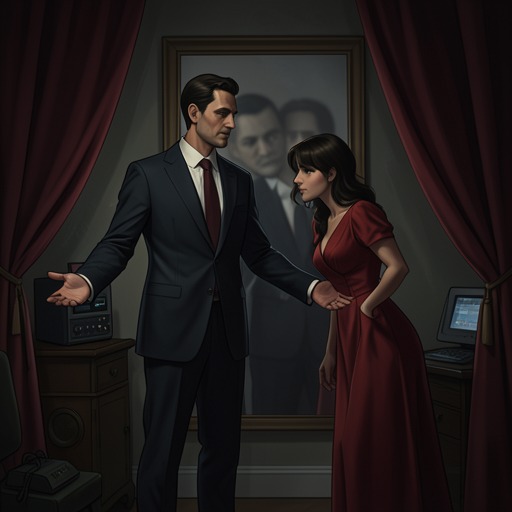
In his first-person account, the immediate rupture occurs when Wedderburn realizes that Bella already knew about his elopement before it happened. He describes trying at once to understand and reject what her words mean. His reaction is physical and inward: he writhes his head, mouths at the air, retreats into a corner, sinks to the floor, and punches at the space around him as if fighting an attacker. The attack is not presented as an actual swarm. He knows the imagined vermin are inside his brain, gnawing there still, and his repeated image makes the sense of invasion inseparable from his own consciousness.
The women present in the room are also transformed by what he calls his madness. Bella and the manageress multiply into a jabbering crowd of dishevelled women, whose sexualized appearance turns his fear into a spectacle shaped by his past seductions. He imagines them binding his limbs and body like a swaddled baby and pouring brandy down his throat; he says he becomes stupid and passive. The image reverses his earlier identity as an energetic seducer: now he is restrained, cared for, and treated as helpless. Yet the scene is available only through his narration, which makes the women’s actions difficult to separate from his hallucinated account of them.
Bella then takes practical charge of his departure. She brings him by cab to the Gare du Nord, buys his ticket, puts it in his waistcoat pocket, points out the pockets containing his money and passport, and places him and his luggage on a train. Wedderburn recalls her speaking soothingly about the journey home, the rest he might get, and the good times they had shared. As the train pulls away, she runs along the platform and calls, “GIVE MY LOVE TO BONNY SCOTLAND!” The vivid farewell stands against the violence of his preceding vision: she does not leave him without his belongings, but she does send him away from their life together.
From Abandonment to Accusation
After the departure, Wedderburn recasts Bella not as an individual who has left him but as a recurring female destroyer. He identifies her with figures from different religious and historical traditions and with women associated, in his account, with famous men. He names Victoria Hattersley as the form she took for General Sir Aubrey de la Pole Blessington, and claims that legal knowledge has enabled him to penetrate the secret of the General’s marriage. His rhetoric expands from personal injury into an all-encompassing explanation: Bella is supposedly the tool of a darker power, and Godwin Baxter is cast as that power in modern Glasgow.
The accusation joins sexual grievance to attacks on scientific authority. Wedderburn portrays Godwin Baxter as a manipulator who has gained wealth, power, and respect through work on human brains and encounters with the dead and dying. His denunciation repeatedly shifts scale, from the private betrayal he has suffered to the supposed spiritual corruption of an entire city. The newspaper’s reference to slanderous statements against a medical philanthropist corresponds to this accusation, but the two accounts do not offer the same kind of evidence: the report records the public disturbance, while Wedderburn’s letter supplies his increasingly fantastic interpretation of it.
A Promised New Life
In a later passage, Wedderburn declares that he will begin a new life through three simultaneous projects. He intends to restore his mother’s wealth by devoting himself to property conveyancing, save Bella from Godwin Baxter by campaigning against what he calls the Modern Babylon in street-corner speeches and letters to the press, and embrace Catholicism, swear eternal chastity, and end his days in a cloister. These plans place professional repair, public protest, and religious renunciation side by side. Their scale and incompatibility echo the instability of the earlier accusations; the declaration offers resolve, but no evidence that he carries the projects out.
The letter closes not with a restored identity but with a self-description shaped by romantic loss and theatrical bravado. Wedderburn signs himself Bella’s outcast welterweight, with a bleeding waistcoat heart, then twists his own name into a repeated, broken signature. The gesture leaves his breakdown suspended between performance and pain. His confinement and the Glasgow Green incident establish its consequences, but the surviving accounts do not show recovery. Instead, the contrast between the official report, the vivid Paris recollection, and the grandiose plan for reform makes the breakdown a crisis in both mind and narration: Wedderburn can recount what happened to him, yet his explanations carry the injury outward into accusation and myth.